
I Moved to Another State — Can They Still Collect Child Support?
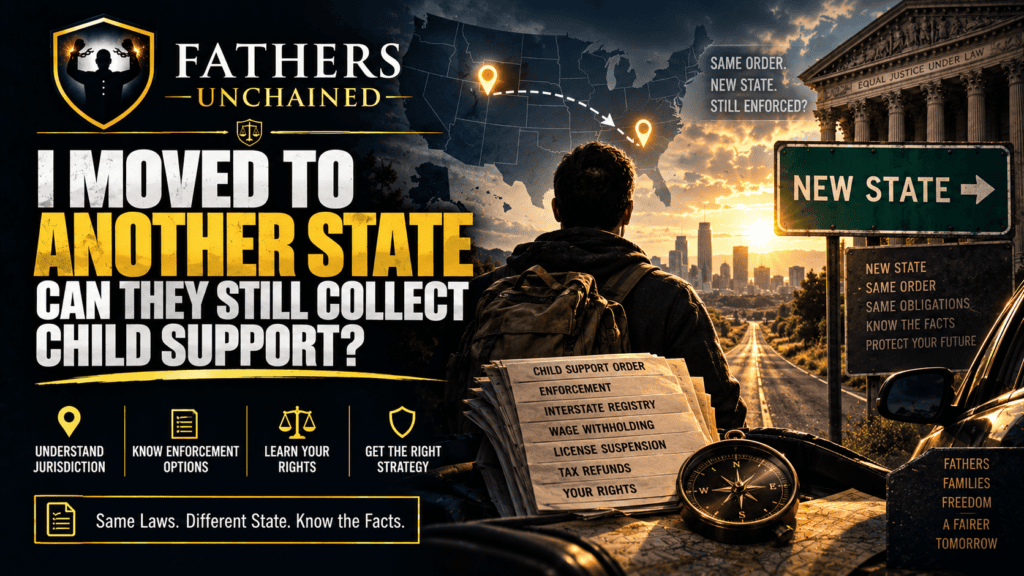
Moved to another state? Child support usually does not stop just because you crossed a state line. If you moved to another state and child support is still being collected, start by identifying the controlling order, the state currently enforcing it, and the exact enforcement action being used.
Interstate cases can be confusing because more than one state may be involved without both states having the same authority. Enforcement and modification are also different questions.
Table of Contents
Moved to another state? Child support starts with the controlling order
Get the current signed order and every later modification. Identify the court that issued the order, the amount, effective date, arrears terms, and whether another state later entered or registered an order.
Under the Uniform Interstate Family Support Act (UIFSA), which all states have enacted in some form, interstate cases use rules designed to identify and enforce a controlling order while limiting competing support orders.
Which state is enforcing the order?
The issuing state and the state where you now live can play different roles. An agency or tribunal in your new state may assist with collection even though the underlying support order came from another state.
Do not assume that enforcement in your new state means the original case was transferred or that the new state automatically gained authority to change the order.
Enforcement and modification are not the same thing
A state may be able to enforce an existing order without having authority to modify it. UIFSA contains continuing, exclusive jurisdiction rules that help determine when the issuing tribunal retains authority to modify its child support order and when another state may obtain modification jurisdiction.
The answer can depend on where the child, obligee, and obligor live, consent, registration, and other case-specific facts. That is why the first task is identifying the controlling order and each party’s current residence.
Two States Involved? Separate the Order From the Enforcement.
The Record Review & Authority Analysis Kit helps you map the controlling order, registration, withholding and enforcement records so you can see which document authorizes which action.
Was the order registered in the new state?
An out-of-state support order can be registered in another state for enforcement and, when legal requirements are satisfied, potentially for modification. Check the court docket and agency file for a notice of registration, certified copies of the order, arrears statement, hearing notice, confirmation of registration, or other interstate filings.
If you received a registration notice, read it immediately. UIFSA procedures can include time limits for contesting registration, and those deadlines matter.
Can wages be withheld across state lines?
Yes. Interstate income withholding is a normal child-support enforcement mechanism. UIFSA permits an income-withholding order issued in one state to be sent directly to an employer in another state in appropriate circumstances, and interstate agency processes can also be used.
If your employer receives withholding paperwork, save the complete document and compare the amount being withheld with the controlling support order, arrears information, and payment ledger.
What happens to arrears when you move?
Moving does not erase accrued arrears. If the balance looks wrong, reconstruct it. Gather the order history, effective dates, official payment ledger, employer deductions, credits, adjustments, interest information where applicable, and the arrears amount transmitted between states.
If you see a discrepancy, use Child Support Amount Looks Wrong? How to Audit the Number rather than treating an interstate case as automatically invalid.
Can two states be involved at the same time?
Yes. One state may have issued the controlling order while another assists with registration, collection, employer withholding, or other enforcement. In some cases, different states may also have records from older proceedings.
Create a simple chart: state, agency or court, document issued, date, action taken, and claimed authority. This makes it much easier to see who is doing what.
What if you think the original case had a service or jurisdiction problem?
Interstate enforcement does not by itself answer whether service, notice, or personal jurisdiction was proper in the original proceeding. Those questions require the original court record and the law that applied when the order was entered.
Get the initiating filing, summons, return or other proof of service, docket, and original orders. Then read Was Personal Service Proper?. Do not assume a defect solely because a document is missing from the papers currently in your possession.
What records should you collect in an interstate child support case?
Collect the controlling order and modifications, original and new-state dockets, registration notices, interstate agency correspondence, payment ledger, arrears statement, income-withholding documents, employer records, enforcement notices, and documents showing where the parties currently reside.
If you are not sure what a docket entry means, use How to Read a Child Support Court Docket to reconstruct the timeline.
Do not fight two states at once until you know what each one is doing
The practical question is not simply “Can they collect after I moved?” It is: Which order is being enforced? Which state issued it? Which state is acting now? Is the action enforcement or modification? Was registration used? What amount is actually due under the record?
Once those questions are answered, you have a much cleaner path for researching the applicable UIFSA procedure and any state-specific deadlines.
Moved to another state? Child support records should be mapped across both states
Don’t argue from a stack of disconnected notices. Download the free Fathers Unchained Docket & Document Checklist and build one file containing the orders, dockets, registration papers, ledger, withholding documents, and agency notices from both states.
If two states, agencies, orders, or withholding records do not line up, map the authority before deciding what to challenge. Use the Record Review & Authority Analysis Kit to organize the record and identify the authority questions you need to research before challenging interstate enforcement.
Educational information only, not legal advice. UIFSA has been enacted nationwide, but state procedures, deadlines, and individual case facts affect interstate child-support enforcement and modification.